
Burning feet. Tingling hands. Numbness that won’t go away. Shooting pain that keeps you awake at night. Or maybe you’ve noticed your balance isn’t what it used to be, and activities you once enjoyed have become difficult.
If you’ve been dealing with neuropathy, you know it’s about much more than uncomfortable symptoms. It can affect your sleep, your independence, your confidence, and your ability to enjoy life.
And perhaps the most frustrating part is trying treatment after treatment without getting the results you hoped for.
At our recent Overcoming Neuropathy workshop, Dr. Tim Smith explained why neuropathy can be so difficult to treat and why understanding the underlying causes is an important first step toward improvement.
His message was clear: Not all neuropathy is the same, and the solution shouldn’t be the same for everyone.
Click the thumbnail below to watch the full workshop to learn about the different types of nerve problems, what may be contributing to your symptoms, and New Life Chiropractic’s approach to helping patients improve their function.
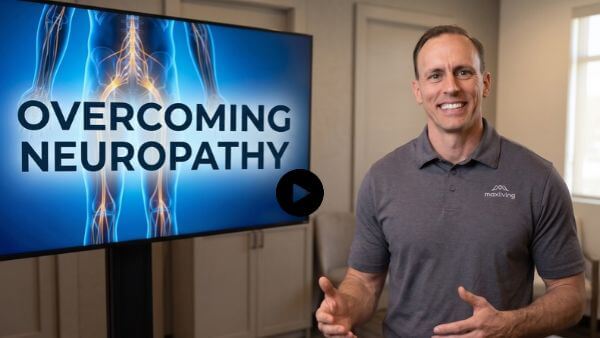
If you’d rather read the highlights, here’s what Dr. Tim shared.
What Is Neuropathy, and Why Does It Cause Burning, Tingling, and Numbness?
Neuropathy occurs when nerves become damaged or stop functioning properly.
Your nerves carry messages between your brain, spinal cord, and the rest of your body. They help you feel sensations, move your muscles, maintain balance, and regulate many functions you don’t consciously think about.
When those signals are disrupted, you may experience:
- Burning or stabbing pain in your feet or hands
- Numbness or tingling
- Muscle weakness or cramping
- Loss of coordination
- Difficulty walking or maintaining balance
- Increased sensitivity to touch
- Reduced ability to feel temperature or pressure
Dr. Tim explained that nerve problems can involve three important functions.
Sensory nerves help you feel touch, temperature, pressure, and pain.
Motor nerves control muscle movement, strength, and coordination.
Autonomic nerves help regulate automatic functions such as heart rate, digestion, and blood pressure.
Depending on which nerves are affected, two people with neuropathy may experience very different symptoms.
That’s one reason Dr. Tim believes a detailed evaluation is so important.
What Causes Peripheral Neuropathy?
Peripheral neuropathy affects nerves outside the brain and spinal cord, often producing symptoms in the feet, legs, hands, or arms.
But the underlying causes can vary considerably.
During the workshop, Dr. Tim discussed several possible contributors, including:
- Diabetes and poor blood sugar regulation
- Injuries and repetitive stress
- Nerve compression or entrapment
- Spinal disc problems
- Poor circulation
- Nutritional deficiencies
- Autoimmune conditions
- Infections
- Kidney or liver disease
- Certain medications and medical treatments
- Exposure to substances that can damage nerves
Sometimes more than one factor is involved.
For example, someone may have diabetes along with lower-back problems and reduced mobility. Treating only one contributor may leave other problems unaddressed.
The goal is to understand why the nerves aren’t functioning properly, not simply give everyone with numb feet the same treatment.
Why Neuropathy Symptoms Can Get Worse Over Time

Neuropathy doesn’t always begin with severe pain.
For many people, the first signs are easy to dismiss. Maybe your feet tingle occasionally. Perhaps your hand falls asleep more often than it used to. Or you notice some numbness after sitting in a certain position.
Over time, symptoms may become more frequent.
You might begin losing sleep because of burning feet. Walking may become uncomfortable. Balance problems can make stairs, curbs, or uneven ground feel intimidating.
In more advanced cases, loss of sensation can increase the risk of injuries going unnoticed, especially in people with diabetes.
Dr. Tim encouraged attendees not to wait until these problems begin controlling their lives.
Early evaluation matters because the cause, severity, and duration of nerve damage can affect which treatments are appropriate and how much improvement is possible.
Could Your Spine Be Contributing to Nerve Pain?
One of the most important points Dr. Tim made was that nerve symptoms aren’t always caused by a problem in the area where you feel them.
For example, numbness or pain traveling into the leg may be related to irritation of a nerve originating in the lower back.
Likewise, certain neck problems can contribute to pain, tingling, or weakness in the arms and hands.
That’s why New Life Chiropractic looks beyond the feet or hands during a neuropathy evaluation.
Dr. Tim explained that spinal alignment, disc health, posture, movement, and nerve function can all be important pieces of the picture.
Not every case of peripheral neuropathy originates in the spine. However, identifying a spinal or nerve-root problem when one is present can help guide the care plan.
How Chronic Stress and Nervous System Function Affect Recovery
Another important part of the workshop focused on the autonomic nervous system.
Your body has a built-in stress response often called fight or flight. This system helps you react to challenges and danger.
But when stress becomes constant, it can affect sleep, digestion, muscle tension, and how the body experiences pain.
Dr. Tim discussed the importance of balancing this stress response with the body’s ability to rest and recover.
He also explained how New Life Chiropractic uses measurements, including heart rate variability, to better understand aspects of nervous-system regulation.
Stress management alone won’t repair every damaged nerve. But improving sleep, movement, nutrition, and daily recovery habits can be valuable parts of a broader health plan.
Why Neuropathy Treatment Should Be Personalized
Dr. Tim shared stories of patients who had already tried medications, injections, exercises, supplements, and other treatments before coming to New Life Chiropractic.
Some had lived with symptoms for years.
His point wasn’t that every previous treatment was wrong. It was that a person’s care needs to match the actual problems contributing to their symptoms.
A personalized neuropathy evaluation may consider:
- When symptoms began and how they’ve changed
- Medical history and existing conditions
- Sensory changes and muscle weakness
- Balance and coordination
- Spinal structure and movement
- Circulation and metabolic health
- Lifestyle habits and nutritional needs
- Treatments already attempted
From there, Dr. Tim develops recommendations based on the patient’s findings, goals, and ability to participate in care.
He also emphasized the importance of establishing a baseline so progress can be measured over time.
New Life Chiropractic’s Approach to Neuropathy Care
During the workshop, Dr. Tim described a program that combines targeted home therapies, corrective chiropractic care, and lifestyle changes.
The approach is designed around the individual rather than a single treatment used for everyone.
At-Home Nerve Stimulation and Light Therapy
Dr. Tim discussed devices used in the office’s home-care protocols, including light therapy and nerve stimulation.
The program is intended to support circulation, stimulate nerve activity, and encourage movement.
He explained that patients may use a structured daily home protocol involving these therapies and specific exercises.
The effectiveness of these approaches depends on the condition being treated, and not every patient is a candidate. The evidence for individual devices and protocols also varies.
Corrective Chiropractic Care
Dr. Tim considers spinal evaluation an essential part of his approach.
When an examination identifies relevant spinal or movement problems, chiropractic adjustments and corrective care may be included in the treatment plan.
The goal is to improve spinal function and address mechanical problems that may be contributing to a patient’s symptoms.
Spinal Decompression and Other In-Office Therapies
For certain patients, Dr. Tim may also recommend therapies such as:
- Spinal decompression
- Laser therapy
- Focused shockwave therapy
- Targeted movement and rehabilitation
These therapies are selected based on the patient’s examination and the conditions being addressed.
They aren’t appropriate for every cause of neuropathy, which is why identifying the source of symptoms comes first.
Why Nutrition, Blood Sugar, and Movement Matter for Nerve Health
Dr. Tim made another point throughout the workshop: What you do at home matters just as much as what happens during an office visit.
For people with diabetes, blood sugar management is especially important because prolonged high blood sugar can damage nerves.
Nutritional deficiencies can also contribute to certain types of neuropathy.
A supportive lifestyle may include:
- Eating nutrient-dense, minimally processed foods
- Managing blood sugar when applicable
- Getting adequate protein and essential nutrients
- Staying physically active within your abilities
- Improving sleep habits
- Reducing tobacco and excessive alcohol exposure
- Following an individualized exercise plan
Dr. Tim compared the process to growing a garden. Planting seeds isn’t enough. You also need water, sunlight, healthy soil, and ongoing care.
In the same way, he believes lasting improvements require attention to the whole person rather than relying on one treatment alone.
Can Neuropathy Improve After Years of Symptoms?
This was one of the biggest questions addressed during the workshop.
Dr. Tim shared patient experiences involving improvements in pain, sensation, movement, and the ability to return to meaningful activities.
He also acknowledged that no provider can guarantee the same outcome for every person.
Some types of nerve damage can improve when the underlying cause is addressed. Other forms may be permanent or require long-term symptom management.
The extent of nerve damage, how long symptoms have been present, and the person’s overall health all influence what may be possible.
That’s why Dr. Tim emphasizes measurable progress.
Rather than relying only on whether someone feels better that day, the goal is to track changes in sensation, movement, balance, function, and other relevant findings over time.
Take the First Step Toward Understanding Your Neuropathy
If you’ve been living with burning feet, numbness, tingling, weakness, or balance problems, it’s understandable to feel frustrated, especially if you’ve already tried several treatments.
But the first step isn’t necessarily another treatment.
It’s finding out what’s actually going on.
At New Life Chiropractic in Rocklin, Dr. Tim Smith takes a personalized approach to evaluating neuropathy symptoms, identifying possible contributing factors, and determining whether the office’s care options are appropriate for your needs.
You deserve to understand your options and have a clear plan for moving forward.
Contact New Life Chiropractic to learn more about a neuropathy evaluation and current appointment availability.